How to use the BMI calculator
- Using the metric system, the BMI calculation divides an adult's weight in kilograms (kg) by their height in metres (m) squared.
For example, if you weigh 70kg and are 1.73m tall, you work out your BMI by:
Squaring your height: 1.73x1.73 = 2.99
Dividing 70 by 2.99 = 23.41
Your result will be displayed to 1 decimal place, for example 23.4. - BMI is calculated by dividing your weight in pounds by the square of your height in inches, and then multiplying by a
conversion factor of 703. See the formula below for an example:
Weight = 150 pounds
Height = 5’5″ (65 inches)
BMI calculation: [150 ÷ (65)^2] x 703 = 24.96
BMI chart for adults
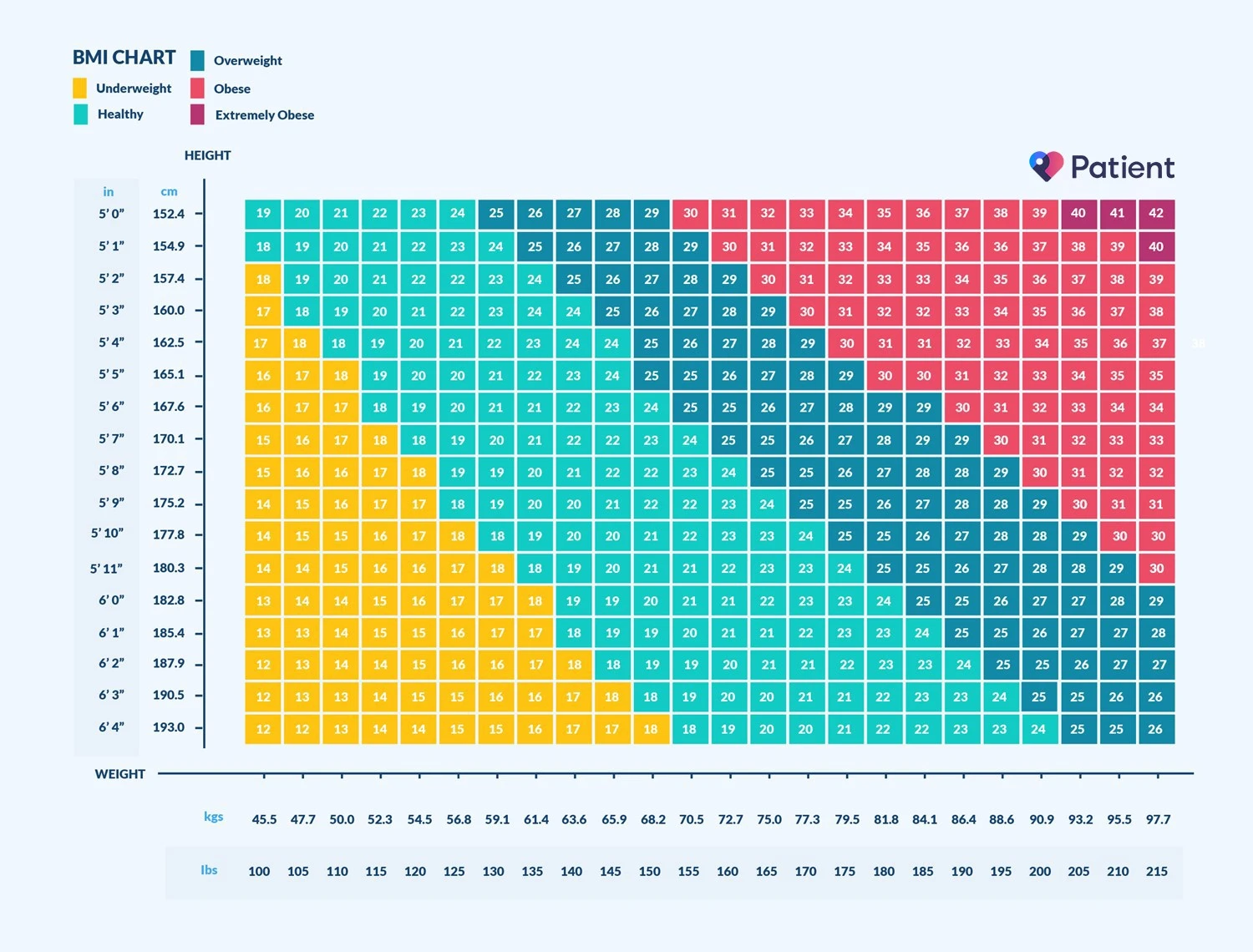
A BMI calculation in the healthy weight range is between 18.5 to 24.9.
For Black, Asian and some other minority ethnic groups, the healthy weight range is 18.5 to 23.
For people of White heritage, a BMI:
For Black, Asian and some other minority ethnic groups, the healthy weight range is 18.5 to 23.
For people of White heritage, a BMI:
- below 18.5 is underweight
- between 18.5 and 24.9 is healthy
- between 25 and 29.9 is overweight
- of 30 or over is obese
- 23 or more are at increased risk (overweight)
- 27.5 or more are at high risk (obese)